Yo, what’s up everyone! I’m a supplier of Pretreatment Auxiliaries, and today I wanna talk about the differences between different Pretreatment Auxiliaries. It’s a topic that might not sound super exciting at first, but trust me, it’s crucial if you’re in the industry. Pretreatment Auxiliaries
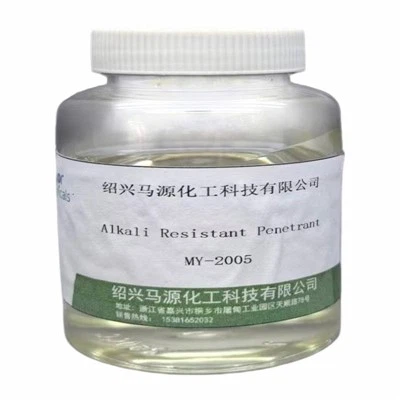
Let’s start with the basics. Pretreatment Auxiliaries are substances used before the main treatment process in various industries, like textiles, metalworking, and even in some food processing. They help to prepare the material, making it more receptive to the subsequent treatments and improving the overall quality of the final product.
Types of Pretreatment Auxiliaries and Their Differences
Detergents
Detergents are one of the most common types of Pretreatment Auxiliaries. They’re used to clean the surface of the material, removing dirt, oil, and other contaminants. In the textile industry, for example, detergents are used to clean the raw fibers before dyeing or finishing.
The main difference between different detergents lies in their chemical composition. There are anionic, cationic, non – ionic, and amphoteric detergents. Anionic detergents are great for removing oily stains because they have a negatively charged head. They’re widely used in industrial cleaning because they’re relatively cheap and effective. Cationic detergents, on the other hand, have a positively charged head. They’re often used in fabric softeners and antistatic agents because they can neutralize the negative charge on the fabric surface. Non – ionic detergents are very mild and are used in applications where you don’t want to damage the material, like in the cleaning of delicate fabrics. Amphoteric detergents have both positive and negative charges, which makes them suitable for a wide range of pH values and materials.
Wetting Agents
Wetting agents are used to reduce the surface tension of a liquid, allowing it to spread more easily over the surface of the material. In the metalworking industry, wetting agents are used in cutting fluids to improve the lubrication and cooling of the cutting tool.
The difference between wetting agents is mainly in their wetting ability and compatibility with different materials. Some wetting agents are more effective on hydrophobic materials, while others work better on hydrophilic materials. For example, silicone – based wetting agents are very effective on hydrophobic surfaces like plastics and metals, while alcohol – based wetting agents are often used on hydrophilic surfaces like paper and some textiles.
Emulsifiers
Emulsifiers are used to stabilize emulsions, which are mixtures of two immiscible liquids, like oil and water. In the food industry, emulsifiers are used to keep oil and water from separating in products like mayonnaise and salad dressings. In the textile industry, emulsifiers are used to disperse oil – based dyes in water.
Different emulsifiers have different HLB (Hydrophilic – Lipophilic Balance) values. The HLB value indicates the balance between the hydrophilic (water – loving) and lipophilic (oil – loving) parts of the emulsifier. Emulsifiers with a low HLB value are more lipophilic and are used to form water – in – oil emulsions, while those with a high HLB value are more hydrophilic and are used to form oil – in – water emulsions.
Antioxidants
Antioxidants are used to prevent the oxidation of materials, which can cause discoloration, degradation, and a decrease in quality. In the rubber industry, antioxidants are added to rubber compounds to prevent them from hardening and cracking over time.
There are different types of antioxidants, such as phenolic antioxidants, amine – based antioxidants, and phosphite antioxidants. Phenolic antioxidants are very effective in preventing the oxidation of polymers and are widely used in plastics and rubber. Amine – based antioxidants are more effective in high – temperature applications and are often used in lubricants and fuels. Phosphite antioxidants are mainly used as co – antioxidants to enhance the performance of other antioxidants.
Chelating Agents
Chelating agents are used to bind metal ions in a solution, preventing them from reacting with other substances and causing problems like staining and precipitation. In the textile industry, chelating agents are used to remove metal ions from the water used in the dyeing process, which can improve the color fastness of the dyed fabric.
The difference between chelating agents is in their selectivity for different metal ions and their stability constants. Some chelating agents are more selective for certain metal ions, like calcium and magnesium, while others can bind a wide range of metal ions. The stability constant indicates how strongly the chelating agent binds to the metal ion. A higher stability constant means a stronger bond.
Why Choosing the Right Pretreatment Auxiliary Matters
Choosing the right Pretreatment Auxiliary is crucial for several reasons. First of all, it can improve the quality of the final product. If you use the wrong detergent, for example, you might not be able to remove all the dirt and oil from the material, which can affect the adhesion of the subsequent coating or dye.
Secondly, it can increase the efficiency of the production process. Using a good wetting agent can reduce the time and energy required to wet the material, which can save costs in the long run.
Finally, it can have a positive impact on the environment. Some Pretreatment Auxiliaries are more environmentally friendly than others. For example, using biodegradable detergents can reduce the environmental pollution caused by the cleaning process.
How We Can Help
As a Pretreatment Auxiliaries supplier, I understand the importance of choosing the right products. We offer a wide range of Pretreatment Auxiliaries, including detergents, wetting agents, emulsifiers, antioxidants, and chelating agents. Our products are of high quality and are carefully formulated to meet the specific needs of different industries.
We also have a team of experts who can provide technical support and advice. If you’re not sure which Pretreatment Auxiliary is the best for your application, just give us a shout. We’ll work with you to find the right solution.

If you’re interested in our products and want to have a chat about procurement, don’t hesitate to reach out. We’re always looking forward to doing business with new customers and helping you improve your production process.
References
- Textile Pretreatment Technology: Principles and Applications – John Wiley & Sons
- Handbook of Metal Pretreatment – Woodhead Publishing
- Food Emulsions and Foams: Interfaces, Interactions, and Stability – Springer
Functional Additives So, that’s all for today’s blog. I hope you found it useful. Catch you later!
Shaoxing Mayor Chemical & Technology Co., Ltd.
We are one of the most reliable pretreatment auxiliaries manufacturers and suppliers in China, specialized in providing high quality products with low price. We warmly welcome you to buy discount pretreatment auxiliaries for sale here from our factory. For pricelist, contact us now.
Address: No. 78, Tianshun Road, Tudian Industrial Park, Tongxiang City, Jiaxing City, Zhejiang Province, China
E-mail: 627249875@qq.com
WebSite: https://www.mayorchemicals.com/
