In the manufacturing industry, precision surface grinders play a crucial role in achieving high – quality surface finishes on a wide range of workpieces. As a well – established supplier of precision surface grinders, I have witnessed firsthand the diverse models available in the market, each tailored to meet different production needs and requirements. In this blog, I will introduce you to the different models of precision surface grinders commonly found in the market. Precision Surface Grinder
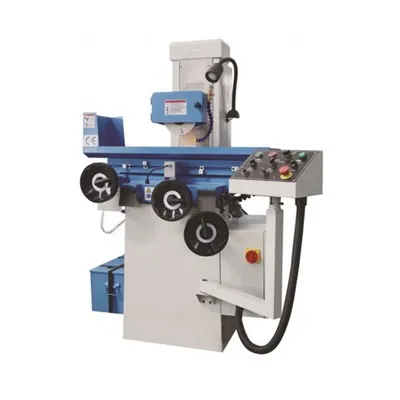
1. Horizontal Spindle Surface Grinders
Horizontal spindle surface grinders are among the most widely used types of precision surface grinders. In this model, the grinding wheel rotates on a horizontal axis. This setup is particularly suitable for grinding flat surfaces with high precision.
1.1 Plain Horizontal Spindle Surface Grinders
Plain horizontal spindle surface grinders are the most basic form of this type. They are designed for general – purpose grinding operations. The workpiece is placed on a reciprocating table, and the grinding wheel moves vertically to control the depth of cut. These grinders are known for their simplicity and cost – effectiveness. They are ideal for small – to medium – sized workshops that need to perform straightforward flat – surface grinding tasks, such as grinding the surfaces of molds, dies, and small machine parts.
1.2 Horizontal Spindle and Rotary Table Surface Grinders
This variation combines the horizontal spindle with a rotary table. The rotary table allows the workpiece to rotate continuously during the grinding process. This is extremely beneficial when dealing with circular or cylindrical workpieces. By rotating the workpiece, the grinding wheel can achieve a more uniform surface finish, and the process is often faster compared to using a reciprocating table. Industries such as the automotive and aerospace sectors often use these grinders for grinding turbine blades, pistons, and other circular components.
2. Vertical Spindle Surface Grinders
Vertical spindle surface grinders have their grinding wheel rotating on a vertical axis. This design offers several unique advantages over horizontal spindle grinders.
2.1 Vertical Spindle and Reciprocating Table Surface Grinders
In this model, the vertical spindle is paired with a reciprocating table. The vertical orientation of the spindle allows for the use of larger – diameter grinding wheels. Larger wheels can cover a greater surface area of the workpiece in a single pass, increasing the material removal rate. This makes them suitable for heavy – stock removal operations. For example, in the manufacturing of large machine bases or structural parts, these grinders can quickly reduce the thickness of the workpiece to the desired dimension while maintaining a good surface finish.
2.2 Vertical Spindle and Rotary Table Surface Grinders
Vertical spindle and rotary table surface grinders are highly efficient for grinding large – diameter circular workpieces. The combination of a vertical spindle and a rotating table enables the grinder to apply a consistent grinding force across the entire surface of the workpiece. This results in a very high – quality surface finish with excellent flatness and parallelism. They are commonly used in the production of large – scale gears, bearings, and other circular components that require precise surface grinding.
3. CNC Precision Surface Grinders
With the advancement of technology, Computer Numerical Control (CNC) has revolutionized the field of surface grinding. CNC precision surface grinders offer a high level of automation and accuracy.
3.1 CNC Horizontal Spindle Surface Grinders
CNC horizontal spindle surface grinders are equipped with a computer – controlled system that can precisely control the movement of the grinding wheel and the workpiece table. This allows for the creation of complex grinding patterns and profiles. Operators can input the desired grinding parameters into the CNC system, and the grinder will execute the operation with high repeatability. These grinders are often used in high – precision manufacturing industries, such as the production of medical devices, optical components, and high – end electronics.
3.2 CNC Vertical Spindle Surface Grinders
Similar to their horizontal counterparts, CNC vertical spindle surface grinders also offer the benefits of automation and precision. The CNC control system can optimize the grinding process based on the material properties of the workpiece and the desired surface finish. This type of grinder is especially useful for grinding workpieces with irregular shapes or those that require a high degree of symmetry. For example, in the production of aerospace components with complex geometries, CNC vertical spindle surface grinders can ensure accurate and consistent grinding results.
4. Manual Precision Surface Grinders
Manual precision surface grinders are still widely used, especially in small – scale workshops and for applications where a high level of operator skill and control is required.
4.1 Benchtop Manual Surface Grinders
Benchtop manual surface grinders are compact and portable. They are designed to be placed on a workbench and are suitable for grinding small – sized workpieces. These grinders are often used by hobbyists, toolmakers, and small – scale manufacturing shops that produce small batches of precision parts. The manual operation allows the operator to have a direct feel for the grinding process and make real – time adjustments to achieve the desired surface finish.
4.2 Floor – Standing Manual Surface Grinders
Floor – standing manual surface grinders are larger and more powerful than benchtop models. They are capable of handling larger workpieces and can perform more heavy – duty grinding operations. Although they lack the automation of CNC grinders, experienced operators can use these manual grinders to achieve very high – quality surface finishes. They are commonly used in industries such as tool and die making, where the ability to make fine adjustments during the grinding process is crucial.
5. Factors Affecting the Choice of Precision Surface Grinders
When choosing a precision surface grinder, several factors need to be considered.
5.1 Workpiece Size and Geometry
The size and shape of the workpiece play a significant role in determining the appropriate grinder. For small, flat workpieces, a benchtop manual grinder or a plain horizontal spindle grinder may be sufficient. However, for large – diameter circular workpieces or those with complex geometries, a vertical spindle and rotary table grinder or a CNC grinder may be more suitable.
5.2 Production Volume
If you are producing a large number of identical workpieces, a CNC grinder is often the best choice as it can offer high productivity and repeatability. On the other hand, for small – batch production or custom – made parts, a manual grinder may provide more flexibility for the operator to make adjustments based on the specific requirements of each workpiece.
5.3 Required Surface Finish
The desired surface finish quality also affects the selection of the grinder. Some applications, such as the production of optical components, require extremely smooth and precise surface finishes. In such cases, a high – precision CNC grinder or a specialized grinder with advanced grinding wheel technology may be necessary.
5.4 Budget
Budget is always an important consideration. Manual grinders are generally more affordable than CNC grinders, making them a popular choice for small businesses or workshops with limited funds. However, it is important to note that the long – term productivity and quality benefits of a CNC grinder may outweigh the initial higher cost in some cases.

In conclusion, the market offers a wide variety of precision surface grinder models to meet different manufacturing needs. Whether you are a small – scale workshop looking for an affordable and flexible manual grinder or a large – scale manufacturing plant in need of a high – precision CNC grinder, there is a suitable option available. As a supplier of precision surface grinders, I am committed to helping you find the right grinder for your specific requirements. If you are interested in learning more about our products or have any questions regarding the selection of a precision surface grinder, please feel free to contact us to start a procurement discussion.
Precision Surface Grinder References
- "Modern Grinding Technology" by Rajender Singh
- "Manufacturing Engineering and Technology" by Serope Kalpakjian and Steven Schmid
- Trade magazines and journals in the field of precision engineering and manufacturing
Wuxi Mingxu Machinery Equipment Co., Ltd.
As one of the most professional precision surface grinder manufacturers and suppliers in China, we’re featured by quality products and good price. Please rest assured to buy the best precision surface grinder for sale here from our factory. Also, custom service is available.
Address: No. 5-5 Jinke Wealth Plaza, Changjiang North Road, Xinwu District, Wuxi City, Jiangsu Province
E-mail: yingyingmxjd@163.com
WebSite: https://www.mingxu-china.com/
