If you’ve ever stood next to an electric pallet truck zipping across a warehouse floor, hauling crates of inventory or pallets of parts like they weigh nothing, you might’ve wondered: what makes that tiny machine actually work? I get this question all the time—both from new warehouse managers just switching from manual trucks, and old heads who’ve been in the business for 20+ years but never dug into the guts of their equipment. As a supplier who’s built and sold these trucks for nearly a decade, I can tell you the unsung hero of every electric pallet truck is the controller. It’s not the battery that keeps the truck moving, and it’s definitely not the steering wheel—though both matter. The controller is the brain, the traffic cop, and the safety enforcer all in one small, boxy unit tucked somewhere under the truck’s deck, out of sight but impossible to live without. Electric Pallet Truck
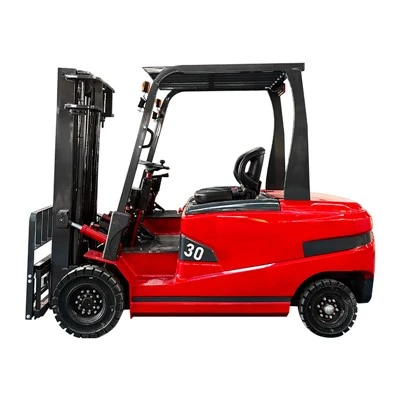
Let’s break this down like I would when I’m walking a new customer through a truck demo, no fancy engineering jargon (I save that for the service techs who ask for it). First, let’s start with what the controller even is, for anyone who’s not deep in material handling. Every electric pallet truck runs on a battery, obviously, and that battery is just a big power bank—you’d blow a fuse (or worse, fry the whole truck) if you hooked that raw, unregulated power straight to the wheels, the brakes, or even the display that tells you how much charge is left. That’s where the controller comes in. It’s a solid-state computer—think of it like the motherboard in your laptop, but built to survive being jostled on concrete, dusted with pallets, and run 12 hours a day in a 90-degree warehouse. Its main job is to be the middleman between the battery, all the moving parts, and the person driving the truck.
Here’s the part that matters most to people actually using these trucks: the controller is what turns your tiny thumb input (the lift/drive lever you squeeze or tilt) into smooth, consistent movement. You don’t have to slam on a gas pedal to make an electric truck lurch forward, right? That’s the controller working. It reads how much you’re tilting the drive lever, translates that into how much power to send to the traction motor, and ramps it up gradually so you don’t send a 3,000-pound pallet crashing into a stack of boxes. I once had a customer tell me they switched to our trucks because a competitor’s model had a controller so jumpy, their team was breaking 2-3 pallets a month from sudden lurches. After we swapped in our standard controller, that number dropped to zero. Small difference, but it adds up fast for a warehouse dealing with high-value goods.
But the controller’s job goes way beyond just making the truck move smoothly. It’s also the safety gatekeeper, and that’s non-negotiable in material handling. OSHA has a whole list of rules for lift truck operation, and the controller helps us (the suppliers) build trucks that meet or exceed those rules without the operator having to remember 10 different steps. For example, if you tilt the drive lever forward too far while the truck is on an incline? The controller detects that the wheels are spinning too fast (or even slipping) and cuts power just enough to keep you from rolling backward or tipping the truck. If you hit a bump or the load shifts, it applies the regenerative brake (that’s the kind that charges the battery a little while you stop) so you slow down without jolting the load. And if the operator lets go of the lever entirely or releases it? The controller immediately triggers the emergency brake—no more manually slamming on brakes, which is how a lot of workplace accidents happen. I’ve seen a few old-school manual truck operators switch to electric and try to stop like they would with a hand brake, and that’s a recipe for trouble. The controller takes that variable out, keeping both the operator and the inventory safe.
Another big part of the controller’s role is managing the battery’s health, and let’s be real—batteries are one of the most expensive parts of an electric pallet truck. A good controller knows how to charge the battery properly, not too fast (which overheats it and shortens its lifespan) and not too slow (which wastes time for the operator). It also monitors the battery’s state of charge, so you get an accurate reading on the display instead of that random “charge left” number that jumps around if you hit a bump. Even better, a lot of modern controllers have diagnostic features built right in. If something’s going wrong—like a faulty motor or a loose wire—the controller will throw a specific error code, not just a generic “something’s broken” light. That saves service techs hours of troubleshooting, which means less downtime for your warehouse. Time is money, right? A truck that’s down for half a day waiting for a tech to guess the problem is way more expensive than a truck with a simple error code.
Wait, let’s talk about load handling too, because that’s why you buy an electric pallet truck in the first place—you’re moving heavy loads all day. The controller adjusts power based on how much weight you’re hauling. If you’re moving a light load of 1,000 pounds, it doesn’t dump full power to the wheels, which saves battery life and makes the truck easier to handle. If you’re moving a full 5,000-pound load (our trucks are rated for that, by the way), it kicks up the power enough to get the load moving steadily but still keeps the speed under control so you don’t strain the motor or risk tipping. I’ve had customers ask if we can make a truck go faster, and my answer is always “not without changing the controller.” The speed isn’t just a random setting—it’s calibrated by the controller, and it’s tuned to the truck’s weight capacity and safety limits. Mess with that, and you’re looking at a hazard.
Now, let’s get real about common misconceptions. A lot of people think all controllers are the same, so the brand of controller doesn’t matter. That’s a myth. The controller is the core, and cheaper controllers will cut corners. I’ve seen budget brands use controllers that can’t handle extreme temperatures—so in a freezer warehouse (where a lot of food and pharmaceutical companies operate), the controller freezes up, and the truck dies mid-shift. Or controllers that can’t handle rough concrete, so after six months, they start glitching, the speed jumps, and you’re replacing the whole unit for $800-$1,200. At our company, we only use industrial-grade controllers rated for -20 degrees F to 120 degrees F, and built with sealed boards to keep dust and moisture out. That’s why our trucks have an average 20% lower downtime than the industry standard—no surprise, since the controller doesn’t fail halfway through a busy season.
I want to share a quick story from a customer of ours to make this concrete (pun intended). Last year, we worked with a third-party logistics (3PL) company that had 12 electric pallet trucks, all from a different supplier. They were dealing with so many controller issues—random speed surges, battery charging errors, brake failures—that they were looking at replacing the whole fleet. We came in, walked their team through the controller basics, and helped them swap to our trucks with our standard controllers. Within three months, they reported a 30% drop in workplace incidents related to pallet trucks, and their battery replacements went from every 18 months to every 27 months. That’s not just better equipment—that’s saving them tens of thousands of dollars a year. The controller wasn’t just a part that made the truck work; it was part of their bottom line.
So, what should you look for when you’re shopping for an electric pallet truck, especially if you’re in the market for a new unit? Don’t just look at price or load capacity. Ask about the controller. What brand is it? What’s its temperature rating? Does it have built-in diagnostics that make troubleshooting easy? Does it prioritize battery health and operator safety? A truck with a cheap controller might save you a few bucks upfront, but you’ll pay for it in repairs, downtime, and higher workplace insurance rates. I always tell new customers: the controller is the last thing you want to worry about, so invest in one that’s built to last.
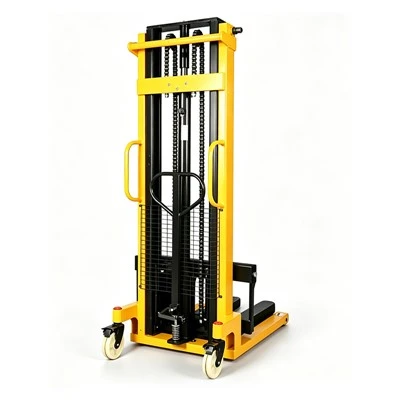
At the end of the day, every electric pallet truck is only as good as its controller. It’s the part that connects all the systems, keeps the operator safe, protects the battery, and makes moving heavy loads easy and efficient. If you’re in the market for new electric pallet trucks, or you’re looking to upgrade your current fleet to cut downtime and improve safety, I’m here to help. We can walk you through the different controllers we use, show you real customer data on how our equipment performs, and help you find the right fit for your warehouse. Don’t hesitate to reach out to us to discuss your needs, ask questions, or request a demo—we’re here to make sure you get a truck that works as hard as you do.
Articulating Boom Lift References
- Material Handling Industry Association. (2022). Safety Standards for Electric Pallet Trucks. MHIA Publication 101-22.
- Electric Power Research Institute. (2021). Battery Management Systems for Electric Material Handling Equipment. EPRI Report EL-8547.
- Occupational Safety and Health Administration. (2020). Powered Industrial Truck Operator Training Requirements. OSHA 29 CFR 1910.178.
- Industrial Vehicle Technology International. (2023). 2023 Global Material Handling Equipment Controller Market Report. IVT Publications.
- National Institute for Occupational Safety and Health. (2022). Preventing Powered Lift Truck Incidents in Warehouse Settings. NIOSH Publication 2022-108.
Huazheng Heavy Industry Machinery Equipment Co., Ltd.
With abundant experience, we are one of the most professional electric pallet truck manufacturers and suppliers in China. Please feel free to buy high quality electric pallet truck for sale here from our factory. We also accept customized orders.
Address: Room 423-101, Building C-4, Electronics Valley Technology Center, No.3088 Lekai North Street, Gaokai District, Baoding City, Hebei Province, China
E-mail: sales02@hzheavy.com
WebSite: https://www.hzheavy.com/
