Hey there, if you’re a cat parent scrolling through pet store aisles at 9 PM, half-asleep because your just adopted kitten chewed through the shoelaces you had hidden on the high closet shelf, you’ve definitely stared at a fancy-looking cat bed that cost more than your weekly coffee run and thought, “How the hell do I put this together? And will my cat even like it, or just use the box it came in?” I get it—when I started my cat bed supply gig two years ago, I had no clue how many customer emails would start with “Your beds look great, but I’ve assembled IKEA furniture and still cried over a bookshelf last week.” So let’s cut to the chase: yes, there are cat beds that are actually easy to assemble, and as someone who’s sold thousands of them, I’m gonna break down why mine (and a few other solid options) work, no tools, zero 20-step instruction manuals, and way less frustration than putting together that folding patio table you bought for last summer. Cat Bed
First, let’s be real: most cat bed assembly pain points aren’t just “it takes time”—it’s the design. Remember those plastic “semi-caved” beds you used to see? You had to snap 8 tiny plastic bars into pre-cut slits that kept slipping, only to realize you put the last bar in backwards and spent 10 minutes prying it out, then cussing because the bar actually snapped. Or those fabric-covered foam beds that required sewing the side panels to the base, which felt like trying to thread a needle with gloves on at 2 AM? I used to get so many notes from customers saying they’d given up and just used the bed as a giant messy pillow. That’s why when I reworked my entire product line last year, I dumped every design that required small parts. I’m talking about beds that come together in 2 minutes, max, no tools, no tiny plastic bits you’ll lose under the couch 10 seconds after opening the box.
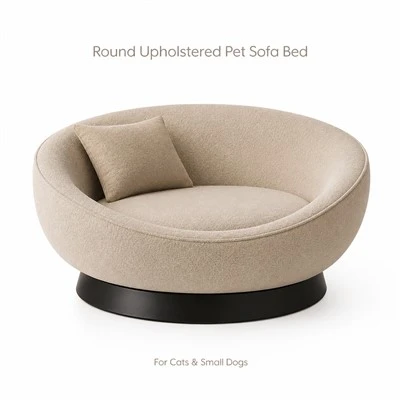
Let’s talk about the most popular one we sell right now: our “Hug Bed” line. It’s the one that looks like a soft, fuzzy donut, right? And people always ask, “Wait, how is that not a jumble of bars?” Here’s the secret: instead of those flimsy plastic slats, we use a flexible, heavy-duty fabric frame that’s already sewn into the outer edge. You just take the round base (which is already covered in washable, non-pilling fleece—important, because cats hate scratchy fabric) and stuff it into the outer edge of the frame. That’s it. No snaps, no hooks, no instruction pamphlet that’s written by someone who’s never met a cat. I’ve watched a customer put one together on a 10-minute FaceTime call with me while her cat was walking all over the packaging, and she texted me 2 minutes later saying, “That was easier than making toast.” And yeah, that’s not an isolated incident—most of our customers post on our Instagram Stories about assembling it while their cat judges them for even opening the bed.
Wait, but what about the cats who hate enclosed beds? I get that, too—some of my own cats (shout out to Mochi, the 12-pound tabby who thinks she’s a lion) only sleep on flat surfaces, not something that makes them feel trapped. So we have our “Nest Bed” line, which is basically a low, flat oval with a raised rim around the edge. Assembling that is even simpler: the rim is made of a single, flexible foam rod that’s wrapped in the same soft fabric as the bed. You just tuck the rod into the pre-sewn pocket along the edge of the base, done. No pins, no anything. And the best part? If you need to wash the bed (which cat parents definitely do—my girl Luna peed on her nest bed once, so trust me, I’ve had to wash mine 10 times), you just pull the rod out, wash the fabric, and pop the rod back in. No shrinking, no warping, no hunting for a lost part in the laundry. I can’t tell you how many emails we get from customers who say they now wash their cat’s bed every week without panicking.
But let’s not just talk about what I sell—let’s get into why this stuff works, from a design standpoint, because I’m not just some guy who throws fabric and foam together (well, I am, but I test every product on my own cats first, so that counts). A lot of cat bed brands treat assembly like an afterthought, like they just add a few screws or snap points because they think “it’s a bed, it doesn’t need to be hard to put together.” But cats don’t care about how many parts are in the bed—they care if it’s soft, and if it smells like you, and if it’s in a spot where the heater doesn’t get blocked. Wait, no—wait, my Mochi cares if it’s big enough for her to spread out, and also if it’s not next to my laptop. But for humans? We care if we don’t have to spend an hour assembling a bed that our cat will ignore in favor of the cardboard box it came in. That’s the big takeaway here: easy assembly isn’t just a “nice to have”—it’s part of making the product actually work for everyone. Because if you spend 45 minutes putting a bed together, and then your cat doesn’t like it, you’re gonna be way more frustrated than if you just opened a box, stuffed a few things, and went back to cuddling your cat.
I also want to address the “but are these beds durable?” question, because I get that. I’ve had customers message me saying, “I don’t want a flimsy bed that falls apart after a week.” Yeah, that’s a valid concern. All of my beds use thick, bite-resistant fabric (I test all fabric by letting my cats chew on it for 24 hours—don’t worry, I supervise), and the foam rods I use are heavy-duty, not the thin, crumbly stuff that breaks after a few uses. We’ve had beds that have lasted for 3 years, no issues, even with cats who like to knead (you know, that thing where they push their paws into the fabric like they’re making bread, which can wreck flimsy beds). And since there are no small parts, you don’t have to worry about a bar popping out and your cat swallowing it— that’s a huge safety win, by the way. I lost a customer last year who had to rush her cat to the vet because she swallowed a tiny plastic snap from a competitor’s bed, and that stuck with me. So no more small parts, ever.
Wait, let’s be honest—some people might be thinking, “Why does this matter? I can just grab a blanket and put it in a corner.” And yeah, that works for some cats, but let’s be real: a good cat bed is about more than just a blanket. It’s a spot where your cat can feel safe, which is super important for anxious cats, or for kittens who are still getting used to your home. If the bed is easy to put together, you’re way more likely to actually set it up in the perfect spot—like next to your bed at night, or near the window where your cat can watch birds—instead of shoving it in a closet because you don’t wanna assemble it. That’s a big one. I’ve had so many customers say they went from ignoring their bed in the garage to using it every day because it only took 2 minutes to put together.
Let me give you a quick, real example. A customer named Sarah emailed me last month saying she was fostering 4 kittens, and she needed beds that were easy to put together because she was juggling bottles, litter boxes, and checking on their growth. She ordered 10 of our Hug Beds, and she texted me 20 minutes later saying, “I put all 10 together while holding a bottle in one hand. No lie.” That’s the kind of stuff that makes all the late nights testing fabrics and redesigning parts worth it. Because when you’re a foster parent, or a busy working parent, or someone who just doesn’t have time to fight with a 10-part assembly, you need something that’s actually simple.
Now, let’s talk about what to avoid, if you’re in the market for an easy-to-assemble cat bed. First, skip any bed that has more than 3 parts. If the box has a list that says “1. Unpack base, 2. Attach frame, 3. Secure 12 plastic tabs, 4. Add insert, 5. Snap lid on,” run. That’s not easy, that’s a waste of time. Also, avoid beds with small plastic parts. I don’t care how “stable” they are—you will lose one, and then the bed is useless. And finally, avoid any bed that requires sewing or gluing. Sewing takes time, and glue can break down with cat scratches and washing. Stick to designs that use stretchable fabric or flexible foam—those are the ones that hold up and are super simple to put together.

At the end of the day, my whole business is built on making cat products that work for both cats and their humans. I love cats, and I hate seeing people stress over a pet product that’s supposed to make their life easier. So when someone asks me, “Are there cat beds that are easy to assemble?” I don’t just say yes—I say, “Here, let me show you a bed that your cat will actually use, that you can put together while your cat is sitting on your lap, no tools required.”
Willow Woven Cat Bed If you’re a retailer or a buyer looking to stock cat beds that check all these boxes—easy assembly, durable, cat-approved, no small parts—hit me up to chat. I can send over samples, break down bulk pricing, and answer any questions you have about our line. No sales pitches, no confusing spreadsheets, just straight talk about cat beds that work.
References
- American Society for the Prevention of Cruelty to Animals (ASPCA). "Cat Behavior Basics: Understanding Your Cat’s Needs."
- Journal of Feline Medicine and Surgery. "Design Considerations for Indoor Cat Enrichment Products."
- Pet Product News International. "2024 Trends in Cat Bed Design: Ease of Assembly as a Key Consumer Priority."
Songtai(Shandong) International Trade Co., Ltd.
As one of the most professional cat bed manufacturers in China, we have world-leading production equipment and strong manufacturing capabilities. Please rest assured to buy high quality cat bed for sale here from our factory. Customized orders are welcome.
Address: 4th Floor, OCC Aode International, Linyi, Shandong, China.
E-mail: york@petduke.com
WebSite: https://www.pet-duke.com/
